
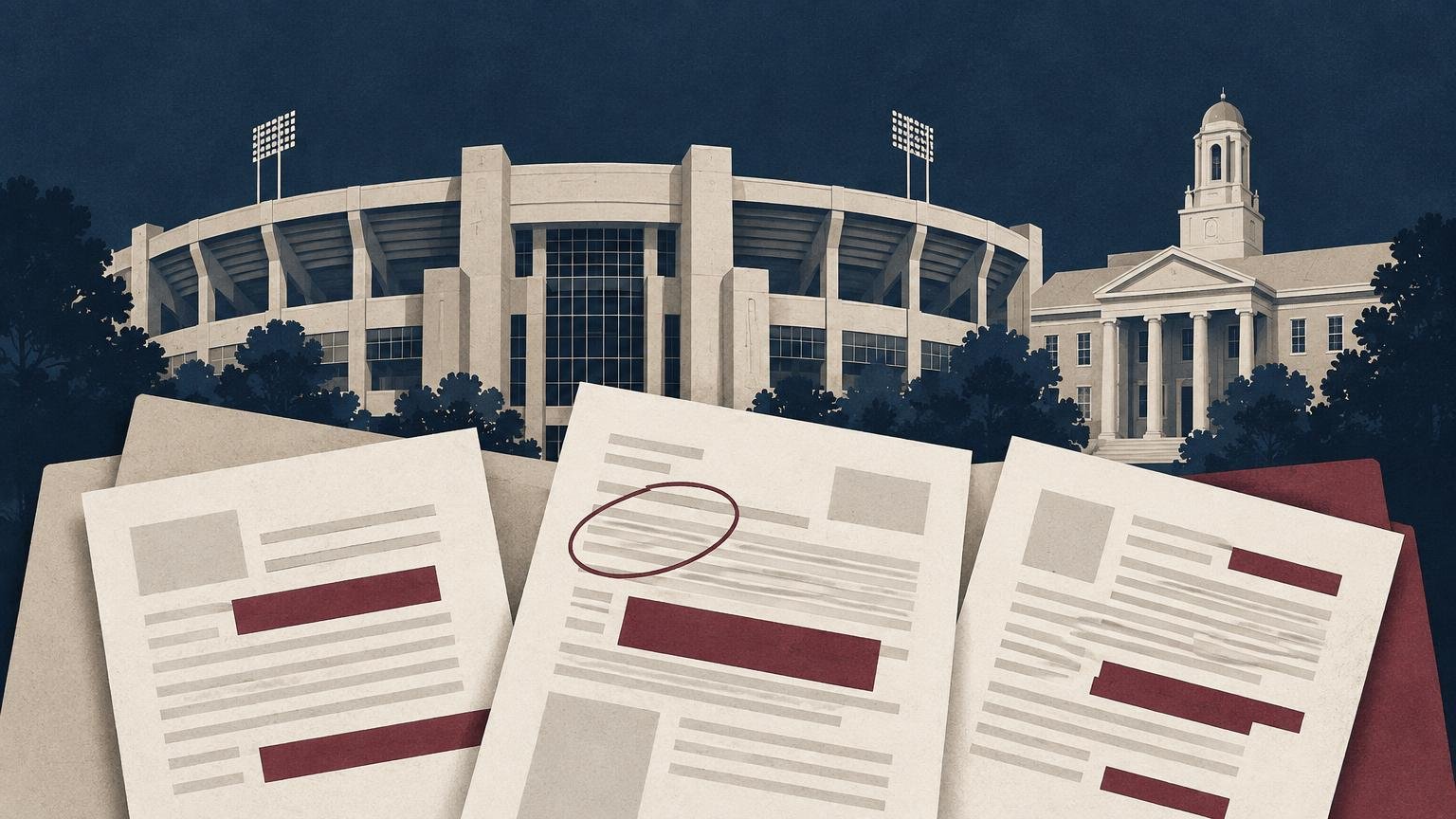
In 2014, a patient told Michigan State University that Larry Nassar had touched her intimately during medical treatment. The university had a warning from a person directly affected, the authority to restrict Nassar’s access to patients, and processes that were supposed to evaluate sexual-misconduct allegations. It nevertheless returned him to clinical work before its investigation was finished and ultimately treated the conduct as medically appropriate rather than sexual misconduct.
That decision is the center of the Larry Nassar Michigan State warnings investigations record. The critical question is not simply whether MSU had a complaint in a file. It is how university officials interpreted the warning, whose expertise they trusted, what protection they offered the complainant and future patients, and why institutional confidence in a prominent doctor outweighed the risk that the complaint identified.
Later state and federal reviews did not produce evidence that every MSU leader knew Nassar was abusing patients before 2016. They did establish something more specific and institutionally consequential: employees and offices received warnings, MSU’s 2014 inquiry was deeply flawed, and the university’s systems failed to respond adequately. Federal officials ultimately found Title IX and campus-safety compliance violations, while a state investigation criticized deference to Nassar, reliance on connected insiders, and resistance to outside scrutiny.
The 2014 complaint was a test of institutional judgment
MSU’s Title IX and police processes investigated the 2014 complaint. Nassar was suspended from clinical duties for part of that period, showing that the university recognized at least a potential need to separate him from patients. But MSU allowed him to resume clinical work before the process concluded. That sequence matters because an interim restriction is a risk-control measure, not a declaration of guilt. Ending it before the inquiry was complete shifted the consequences of uncertainty away from the institution and back toward patients.
The investigation then framed the reported touching through Nassar’s asserted medical explanation. MSU relied in part on opinions from medical professionals associated with the university. The Michigan Attorney General’s later review criticized the use of experts who had professional or personal connections to Nassar or MSU’s College of Osteopathic Medicine instead of neutral specialists. The Attorney General’s 2018 investigation status report described that choice as part of a broader failure to examine the warning independently.
The distinction is not technical. When the accused person is a physician and the complainant is a patient, the institution controls access to expertise, records, supervisors, and the workplace. A patient should not have to defeat an internal circle of professional deference merely to have her report evaluated as a safety warning. Neutral review was especially important because the central dispute concerned whether conduct presented as treatment was medically legitimate.
MSU’s process concluded that Nassar’s conduct was medically appropriate rather than sexual. That conclusion did more than close a case. It validated Nassar’s explanation inside the institution and allowed him to continue occupying the role that gave him authority over patients. An investigation can therefore cause harm even without an openly hostile finding: it can translate institutional confidence in an employee into a barrier that future complainants must overcome.
Warnings existed without universal leadership knowledge
The public record requires precision about who knew what. The state investigation described survivor accounts in which concerns or reports reached multiple MSU employees. It also identified a pattern of deference to Nassar and characterized the institutional response as one of indifference and protection. Those findings support scrutiny of the employees, supervisors, investigators, and offices that encountered warnings. They do not prove that every administrator—or every senior leader—knew before 2016 that Nassar was committing sexual abuse.
That limitation does not excuse the university. Institutional responsibility is not confined to whether a president personally receives a fully proven allegation. Universities distribute authority among clinical supervisors, police, Title IX personnel, human resources staff, department leaders, lawyers, and executives. The relevant accountability question is whether information reached people with the power to restrict access, require safeguards, escalate concerns, preserve records, or seek an independent medical assessment.
In Nassar’s case, the 2014 complaint reached formal university systems. MSU briefly restricted his clinical work, investigated, and made a decision about what the touching meant. This was not a case in which the institution had no opportunity to act. It had an opportunity and used it poorly.
MSU’s public defense did not answer the documented failures
In January 2018, then-President Lou Anna Simon told the MSU community that external counsel expected the evidence to show that no university official believed Nassar had committed sexual abuse before reports emerged in summer 2016. Read narrowly, the statement concerned what officials believed—not whether they received warning signs, whether investigations were competent, or whether their decisions protected patients.
The Attorney General’s account exposed that weakness. Its 2018 status report pointed to earlier reports, the defective 2014 inquiry, institutional deference to Nassar, and disputes that impeded document production. The report did not adjudicate every survivor allegation or amount to a complete review of every organization connected to Nassar. It was a status report from an ongoing state investigation. But it supplied a documented rebuttal to any institutional narrative suggesting that the absence of acknowledged belief resolved the question of responsibility.
Belief is partly the product of process. If an institution selects connected experts, privileges the professional explanation of the accused, and treats the complainant’s account as a misunderstanding of medicine, it can manufacture its own lack of belief. The proper inquiry is therefore not only whether officials recognized abuse. It is whether MSU’s choices made recognition less likely.
Federal reviews converted criticism into compliance findings
Federal education officials concluded in 2019 that MSU violated Title IX in its handling of matters involving Nassar and William Strampel. A separate Clery Act review produced a $4.5 million fine and corrective obligations. These were compliance findings, not simply expressions of disapproval or damage to the university’s reputation.
Title IX governs a school’s response to sex discrimination, including sexual harassment and violence, while the Clery Act imposes campus-safety disclosure and related institutional duties. The federal actions therefore examined different parts of the university’s responsibility: how it responded to sexual-misconduct information and how its safety systems recorded, communicated, and addressed risks. The resulting requirements placed reform under federal oversight rather than leaving MSU to define an adequate response for itself. The Department of Education’s report to the president and education secretary provides the federal context for that enforcement.
A separate Justice Department inspector general review found that FBI offices mishandled allegations passed through USA Gymnastics in 2015 and 2016. That failure matters because it shows how another powerful institution also failed people reporting Nassar. It does not dilute MSU’s responsibility. The FBI review addressed a different chain of reports and decisions; it cannot substitute for examining MSU’s 2014 investigation, its supervision of a university physician, or its control over clinical access.
The records dispute became another accountability failure
The state investigation’s ability to establish a complete timeline was limited by a prolonged dispute over MSU records. The university withheld documents under claims of attorney-client privilege, constraining the Attorney General’s review and leaving important questions about leadership knowledge unresolved. Privilege can protect legitimate confidential legal communications, but broad or unsupported claims can also prevent the public from seeing how an institution understood and managed a crisis.
MSU later released 6,014 documents. In 2024, the Attorney General concluded that the newly available material did not contain relevant evidence warranting continued investigation. The same review said many or most of the records withheld for years did not appear to be privileged. Both conclusions belong in the account: the release did not reveal a new evidentiary basis for extending the investigation, but the lengthy withholding still obstructed timely scrutiny.
The absence of a new discovery in 2024 does not retroactively justify the delay. Accountability depends partly on timing. Records released only after years of dispute cannot assist investigators, survivors, trustees, or the public when major decisions are being made. MSU’s document handling should therefore be judged as an institutional choice separate from what the records ultimately contained.
MSU documented reforms, but completion is not effectiveness
MSU says it completed 95 actions required by federal Title IX reviews. Its reported work covered employee review, conflicts of interest, reporting, transparency, remedies, and other compliance measures. These are material implementation steps. They show that the federal findings resulted in assigned tasks and that the university created a record of responding to them.
MSU also describes its current Institutional Assessment and Responsive Action as a survivor-informed, systemic review. The university says the process is not an investigation designed to determine individual wrongdoing. That distinction should be explicit. A systemic assessment can identify patterns and recommend structural improvements, but it cannot replace an investigation when the public question is who exercised authority, who failed to act, and whether consequences followed.
What meaningful accountability would now require
The strongest test of MSU’s reforms is whether they change decisions at the moment a warning arrives. Policies become credible when the university can demonstrate how they work in practice, particularly when a report concerns a respected physician, coach, donor, professor, or administrator.
- Independent expertise: Reviewers evaluating disputed medical conduct should be free from professional and personal ties that could favor the accused or the accused’s department.
- Protective action during uncertainty: Interim restrictions should reflect the potential risk to patients or students without being confused with a final finding of guilt.
- Clear ownership: A named office and accountable official should be responsible for escalation, safeguards, record preservation, and follow-through.
- Transparent outcomes: Public reporting should explain aggregate response times, policy compliance, conflicts identified, remedies provided, and failures corrected while protecting complainants’ privacy.
- External verification: Independent audits should test whether employees follow the revised procedures, rather than relying exclusively on the university’s representation that required tasks are complete.
- Consequences for noncompliance: Supervisors and officials who ignore safeguards, conceal information, or frustrate review should face consistent institutional action.
For students, patients, and families, these measures determine whether reporting is a real route to protection or merely an administrative procedure. A system that accepts a report but filters it through deference to insiders can appear functional while reproducing the conditions that allowed harm to continue.
The central failure was how MSU used its authority
The record does not support a simple claim that every Michigan State leader knew what Nassar was doing. It supports a more precise and still devastating conclusion. MSU received a direct complaint in 2014, evaluated it through a process later criticized for conflicted expertise, returned Nassar to clinical work before the inquiry ended, and concluded that the reported conduct was medically appropriate. Later federal reviews found compliance failures, while the state investigation encountered years of resistance over records.
MSU has documented policy and compliance work since then. The unfinished question is whether it has changed the distribution of credibility and power. Durable reform would mean that a person reporting intimate touching does not have to disprove the assumptions of a prominent professional’s colleagues before the institution takes risk seriously. That is the standard by which Michigan State’s response should continue to be measured.
Frequently Asked Questions
How did MSU respond to the 2014 complaint about Larry Nassar?
MSU investigated through its Title IX and police processes and temporarily suspended Nassar from clinical duties. It returned him to clinical work before the inquiry ended and ultimately concluded that the reported conduct was medically appropriate rather than sexual.
Did the investigations establish that every MSU leader knew Nassar was abusing patients?
No. The record shows that warnings reached multiple employees and formal university systems, but it does not prove that every administrator or senior leader knew before 2016 that Nassar was committing sexual abuse.
Why was MSU’s 2014 investigation criticized?
The Michigan Attorney General’s review criticized MSU for relying partly on medical professionals with professional or personal connections to Nassar or MSU’s College of Osteopathic Medicine instead of neutral specialists.
What did federal education officials find?
Federal officials concluded in 2019 that MSU violated Title IX in its handling of matters involving Nassar and William Strampel. A separate Clery Act review resulted in a $4.5 million fine and corrective obligations.
What did the 2024 review of previously withheld records conclude?
After MSU released 6,014 documents, the Attorney General found no relevant new evidence warranting continued investigation. The review also said that many or most of the records withheld for years did not appear to be privileged.
References
- MSU Investigation Status
- Nassar OCR Report Sept 2020
- US Department of Education
- www.ed.gov
- President Simon: Letter to MSU community, Jan. 19, 2018 | Our Commitment | Michigan State University
- Stanley sets course of action following federal reviews | MSUToday | Michigan State University
- Investigation and Review of the Federal Bureau of Investigation’s Handling of Allegations of Sexual Abuse by Former USA Gymnastics Physician Lawrence Gerard Nassar
- MSU Final Report
- www.michigan.gov
- OCR Clery Breakdown
- MSU completes 95 actions from federal Title IX reviews | MSUToday | Michigan State University
- Track Our Progress | Our Commitment | Michigan State University
- Institutional Assessment and Responsive Action